Hi everyone,
I know, I said monthly.
But Adin.AI is going global right now and it's eating all my time. New markets, new clients, too many flights. So this newsletter comes when it comes. Bear with me.
My DMs are always open. Anything about AI in marketing, just write me. I read everything.
One more thing. I want to start coffee meetups in London and Istanbul. A few people who care about AI in marketing, one table, good coffee, real talk. No stage, no slides. If you're in, reply and tell me which city.
This issue has four topics: where your ad data actually lives, why all AI content looks the same, why your Google rankings stopped mattering, , and some good news from us.
Let's start.

Where Is Your Advertising Data?
Every brand is preparing for AI right now. Almost none of them own the one thing AI actually needs. Their advertising data.
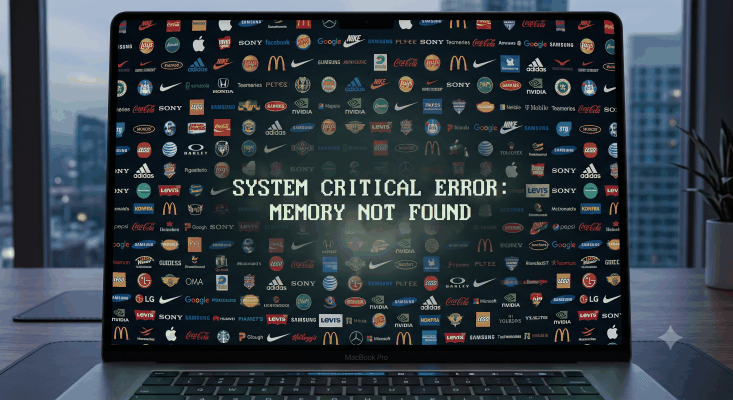
I've spent more than twenty years in advertising. First on the agency side, now building Adin.AI. And I can tell you the question I hear most often in boardrooms this year is not about creativity, not about budgets, not even about talent. It's this: what is our AI strategy?
Fair question. But almost everyone is skipping the question that comes before it.
The ambition is real. I see it every week.
The numbers back up what I see in meetings. Gartner's 2026 CMO Spend Survey found that 70% of CMOs call AI leadership a critical goal for this year. BCG asked 300 global CMOs and 96% of them said AI is transforming their function end to end. And Duke's CMO Survey shows AI use in marketing nearly doubled in two years, from 13.1% of activities in 2024 to 24.2% now. Marketers in that same study expect AI to run more than half of all marketing work within three years.
So yes, marketing is going AI-first. No argument from me.
But here's what those surveys also say, and this part gets much less attention. In the Gartner study, only 30% of CMOs feel their organization can actually scale AI. In the BCG study, only about a third have done the real work. Everyone wants the outcome. Few have the foundation.
Why? Well, it comes down to something very unglamorous.
AI doesn't run on ambition. It runs on data.
If you want AI to plan your media, move your budgets, and tell you what actually drives growth, it needs your advertising history. Every campaign you ever ran. Every result, good and bad. Every market, every brand.
So before you write a single line of your AI strategy, answer this one question:
Where is your advertising data?
I ask this in almost every first meeting with a brand. And I can count on one hand the people who answered it in one sentence. Most answers start with "well, it depends" and end somewhere uncomfortable.
Here's where it usually ends up.
Three places your data lives. None of them are yours.
Inside the platforms. Around 70% of digital ad spend now flows through closed ecosystems, mostly Google, Meta, and Amazon. The industry calls them walled gardens, and the name is honest. As LiveRamp puts it, the data generated from those campaigns belongs to the platform, and brands often struggle to even collect it. Read that again. You paid for the campaigns. The platform kept the intelligence.
At your agencies. I ran agencies for years, so I say this with love. Your media agency holds years of your performance history in their systems, their templates, their people's heads. When you switch agencies, most of that knowledge walks out the door with them. And who legally owns that data? The industry has been arguing about it for a decade. Most contracts still don't give a clear answer.
Scattered inside your own company. This one surprises people the most. Salesforce found that the average enterprise runs 897 applications. Only 29% of them are connected to each other. In marketing specifically, barely half of marketers have full access to their own company's sales, service, and commerce data. The rest lives in Excel files, in old decks, in someone's inbox. Sometimes in the memory of a person who resigns next quarter.
Add it all up and you get one brutal number. 92% of organizations lack AI-ready data. And 84% of technical leaders say their data strategy needs a complete overhaul before AI can deliver anything.
So the ambition sits at 96%. The foundation sits at 8%. That gap is the story of enterprise AI right now.
Why should a CEO care? Because this gap costs money.
Not in some abstract future. Today.
PwC's Pulse Survey found that CMOs name unclear data ownership and limited access as the number one barrier to delivering their strategy. In the same research, 63% of CMOs said they miss opportunities because they can't decide fast enough. Slow decisions are expensive. You just never see the invoice.
Gartner's head of marketing research, Ewan McIntyre, said it plainly: CMOs are buying AI tools faster than they're building the data foundations to scale them. I'd go one step further. Buying AI tools without owning your data is like hiring a brilliant analyst and refusing to show them your numbers.
Here's how I frame it for our clients. A brand has two assets that can't be rebuilt: the brand itself, and its data. Everything else, the tools, the teams, the campaigns, you can rebuild. But right now one of those two assets sits in other people's systems, feeding other people's algorithms. Google optimizes for Google. Meta optimizes for Meta.
Nobody optimizes for you. Unless you own the data that makes optimization possible.
So we built AD MEMORY.
AD MEMORY is Adin.AI's answer to this problem. It collects a brand's scattered advertising data from every platform, every agency, and every file, stores it securely in one place that the brand fully owns, and lets teams ask it questions in plain language.
We didn't build it because it sounded clever. We built it because we kept hearing the same story from some of the world's most valuable brands. Years of advertising history spread across platforms, agencies, markets, and files. Nobody could see the whole picture. So nobody really owned it.
AD MEMORY does three things:
It collects. Your ad data from every platform, every agency, every file. Going back years, not months.
It stores. Securely, in one place, owned by you. Not by a platform. Not by an agency. You.
And you talk to it. That's the part people don't believe until they see it. You just ask. Which channels drove growth in Germany last year? How did our summer campaign compare to the one before? What happens if we move budget from social to retail media? The answer comes back in seconds, not in next week's report.
No more asking three teams and getting four answers. Your advertising memory, always on, always yours.
Own your data. Own your destiny.
AI transformation isn't a tool decision. It's an ownership decision.
In short: no brand data, no ownership, no AI readiness
The brands that win the next decade will be the ones that take their data back now, while the gap between leaders and laggards can still be closed.
So ask yourself one more time. Where is your advertising data? And who really owns it?
If you don't like your answer, let's talk.
See AD MEMORY in action → Book your demo
Everyone Has AI. So Why Does Everything Look the Same?
The tools got smarter. The content got flatter. And the brands that stand out in 2026 are doing one thing differently.
Quick story. "Slop" was picked as a word of the year for 2025. Not by marketers. By the general public, describing the flood of AI-generated content filling their feeds.
That should sting a little. Because we made most of it.

The numbers behind the flood
AI content is not a side experiment anymore. It's the default production line.
- 87% of marketers now use generative AI in at least one workflow.
- IAB reports 86% of buyers use or plan to use it for video ad creative, in a US digital video market passing $80 billion this year.
- At the Super Bowl, Anomaly's chief AI officer estimated around 50% of all spots used generative AI somewhere in production.
- And the backlash arrived on schedule. Svedka's AI-generated Super Bowl spot drew real criticism, and Cannes 2026 built its whole program around human creative authority.
So adoption is total. Which means adoption is no longer an advantage. It's the entry ticket.
The real problem: everything trends toward the median
Here's the sharpest line I've read on this, from agency CEO Taryn Crouthers: "A lot of the output is trending toward the median."
She's right, and the reason is simple. Everyone is using the same models. The same models are trained on the same internet. Ask them for a campaign idea and they give you the average of everything that already exists.
Average content. Average targeting. Average results. At incredible speed.
Let's be fair. The tools are genuinely great.
I'm not here to bash AI. These tools are making creative production faster, cheaper, and open to everyone. That's real democratization, and it's good news.
Think about what's already changing:
- A campaign film that needed a six-figure production budget can now be built by a small team. Big-budget shoots are becoming optional, and soon they may not be needed at all.
- Testing ten creative directions used to take weeks. Now it takes a day.
But here's the part the hype skips. Three things still depend entirely on humans:
- Brand. What you stand for. No model knows this better than you.
- Strategy. Where to play, what to say, and why. AI can support the thinking, not replace it.
- Creative judgment. The taste that separates an idea from a template.
Now add one more ingredient: an art director who genuinely knows how to use AI tools. Not someone who types a prompt and takes the first output. Someone who directs the machine like they'd direct a crew. When you have that, you get great work at a fraction of the cost. That's the opposite of slop.
Want proof? Watch this World Cup 2026 film made with Higgsfield. It's one of the best AI works out there right now. Same tools everyone else has. Completely different result. The difference isn't the model. It's the person directing it.
Video in the original LinkedIn post: WORLD CUP 2026 🏆 The AI Football Movie ↗
A pro tip for right now
Here's something we've noticed, and once you see it, you can't unsee it.
The slop feeling shows up strongest in scenes with people. AI-generated humans still feel slightly off, and audiences catch it instantly, even when they can't explain why.
So the practical fix, at least for now: shoot real people, let AI build everything else. Real cast for the human scenes, AI for environments, product shots, variations, and post. You keep the trust, you cut most of the production cost.
And the long game? Your own data.
The brands that stand out won't just have better art directors. They'll have better inputs. As one expert put it in Klaviyo's 2026 trends report, winning brands won't have better AI, they'll have better ingredients.
Models are becoming a commodity. Your data never will be. Nobody else has your campaign history, your market learnings, your customer signals. Feed those into AI and it learns what works for your brand, not what works on average.
The near future is hybrid
Real people where they matter, AI everywhere else. Human brand, strategy, and taste on top. Machine speed underneath.
And here's the twist most people miss. We're entering a period where creativity will be more valuable and more effective than ever. Not less. When anyone can produce anything, the idea decides everything.
That's why a Creative Skills section is coming soon to Adin.AI.
Your Rankings Won't Matter Anymore
For twenty years, brands fought for page one on Google. That fight just quietly ended. A new one started.
Here's a number that should worry every CMO.
In mid-2025, a top-10 Google ranking predicted 76% of AI citations. Meaning: if you ranked well, AI tools like Google's AI Mode quoted you when answering questions. By early 2026, that share dropped to 38%.
Read that again. In less than a year, the link between ranking well and being visible in AI answers broke in half.
Why this matters now, not someday
Because the audience already moved. This is not a future trend.
- Google's AI Mode has passed 1 billion monthly users. AI Overviews reach 2.5 billion. These are not experiments anymore.
- About 68% of US Google searches now end without a click. People get their answer and leave.
- Adobe's 2026 research found customers now cite AI platforms as their primary tool when researching products. Ahead of brand websites. Ahead of reviews.
- And ChatGPT just opened self-serve advertising with no minimum spend. A whole new paid channel, overnight.
So your customer's first impression of your brand is now written by an AI. The question is whether that AI knows you, and what it says.
OK, so what is GEO?
You'll hear this term a lot this year, so let's keep it simple.
GEO stands for Generative Engine Optimization. It's the practice of structuring your content and brand presence so AI systems cite and recommend you when they answer questions.
Think of it this way. SEO was about convincing a search engine to rank your page. GEO is about convincing an AI to include your brand in its answer. Different game, different rules.
And it's moving fast. Duke's CMO Survey found that 40% of companies already practice GEO. A discipline that did not exist two editions of the survey ago.
The part most people miss: GEO is not for humans
This is the mindset shift, so read this part slowly.
For twenty years, we wrote content for people and formatted it for Google. That era is closing. Your next reader is not a person scrolling results. It's an LLM building an answer, or an AI agent doing research on someone's behalf.
- People already ask AI instead of searching. The answer they get is your first impression, and you're not in the room.
- AI agents are starting to compare products, shortlist vendors, and even make purchases autonomously. The buyer might be a machine acting for a human.
- So the chain has changed. You reach humans through the machines now. If the machines don't know you, the humans never will.
That's why waiting is expensive. AI systems are forming their picture of your brand right now, from whatever exists today. Every month you're absent from the answers, a competitor fills the space. And unlike rankings, you can't buy your way back in with a bigger budget.
What actually gets a brand cited by AI
The research points to a few clear things. None of them are backlinks.
- Clear, direct, citable content. AI models quote passages, not pages. If your key facts are buried in marketing fluff, they get skipped.
- Consistency across every surface. Your site, your product data, reviews, press. When the story matches everywhere, AI trusts it. When it doesn't, you disappear from the answer.
- Structure. Clean headings, real numbers, plain language. Boring wins here.
Two pro tips to start this week
You don't need a big project to begin. Start here:
1. Audit yourself, tonight. Open ChatGPT, Claude, Gemini, and Perplexity. Ask "what is [your brand]?" and "best [your category] in [your market]?" Do it in every market you operate in. What comes back is your real brand page now. Most leaders are shocked the first time.
2. Then get a proper tool. Manual checks don't scale, and AI answers change constantly. A new category of GEO tools tracks this for you. The best ones right now:
- Profound — the enterprise leader. Deepest data in the category, Fortune 500 client base, priced accordingly.
- Peec AI — the fastest-growing challenger. Strong on how AI perceives your brand against competitors. Chanel and Wix are on the client list.
- Otterly.AI — the easiest start. Affordable, quick setup, and good at market-by-market tracking, which matters if you run multiple countries.
- Scrunch — built for a specific fear: catching AI misinformation and hallucinations about your brand before your customers do.
Well, here's the uncomfortable part
Most enterprise brands cannot answer a simple question: what does AI say about us today? In which markets? Against which competitors?
They track rankings. Rankings stopped predicting visibility.
And there's a deeper issue. Consistency across every surface requires one source of truth about your brand and your performance. Most companies don't have that. Their story lives in fragments, spread across platforms, agencies, and files. AI reads fragments and writes a fragmented answer. Or worse, your competitor's answer.
So the fix is not another SEO project. It starts with knowing what the machines see, and keeping your brand's story consistent everywhere they look.
And some news. A GEO Skills section is coming soon to Adin.AI. Tracking what AI says about your brand, across markets and competitors, next to the data that runs your media.
So here's our question for you: which of the tools above would you want to see inside Adin.AI? Tell us. Or if you'd rather talk it through:
Before you go: some news from us
Two pieces of big news on our side. 🚀
First: ADIN.AI ranked #13 on the Deloitte Technology Fast 500 EMEA list.
So, what does that actually mean? It means we're among the fastest growing technology companies across Europe, the Middle East, the UK, and Africa. It means we're competing alongside some of the most exciting tech companies in the region.
Second: We made it to the London final of The Pitch by J.P. Morgan and Deel. Out of 40,000+ startups, we're in the top 40.
Here's the part that matters most to us. Everything we write about in this newsletter, brands taking back control, owning their data, building real AI foundations, is the same story behind these numbers. Our growth comes from enterprise brands deciding they want a different way to run their marketing. So these rankings are really theirs.
Thank you to every teammate, customer, partner, and supporter who is part of this story.
And most importantly: we're just getting started. 💙
That's it for this issue.
Reply anytime, my DMs are open. And don't forget to tell me: London or Istanbul?
See you in the next one.
Serhat