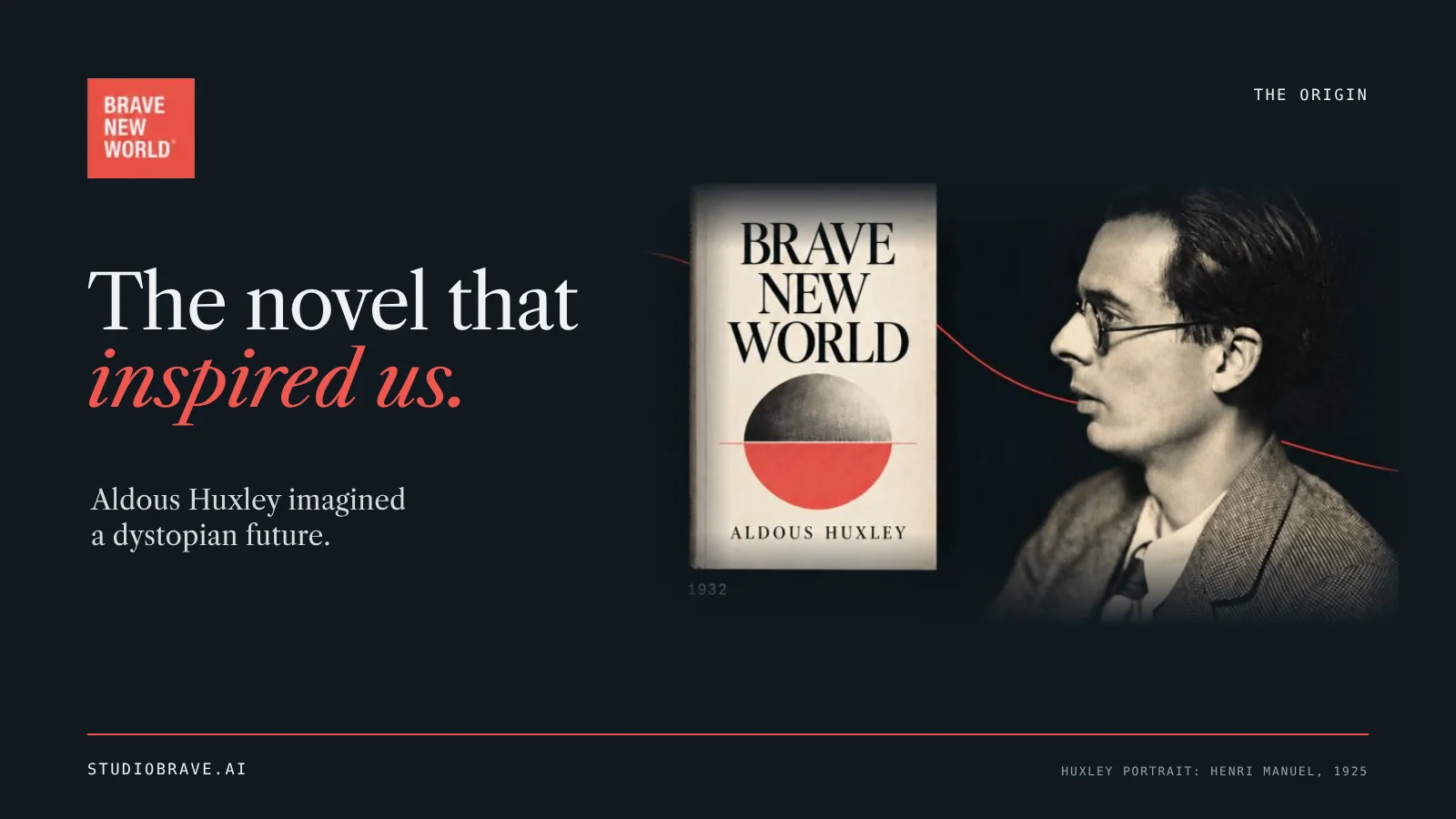
When I tell people I registered Brave New World as a trademark for advertising and marketing services in the UK, they usually ask two questions: “What made you think of doing that?” and “How did you manage to get the name?”
I was surprised it was possible, too.
The story began when I read Aldous Huxley’s novel for the second time. I wasn’t searching for a company name. I was exploring AI and creativity, and the book made me think again about the future we might create.
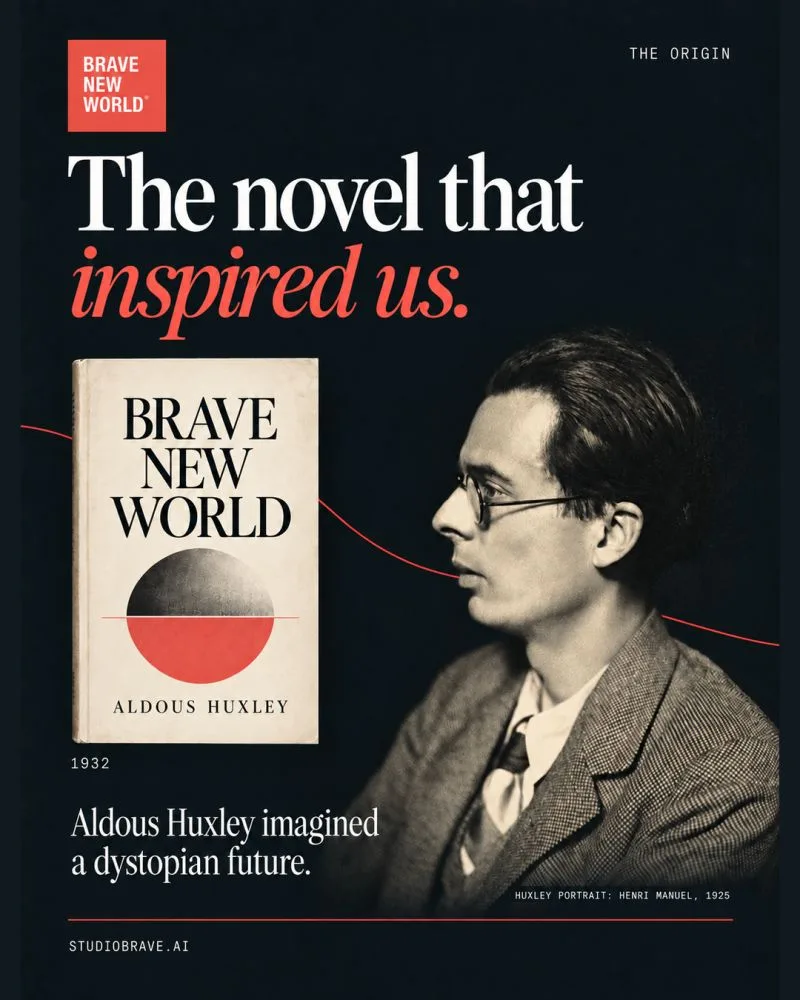
Huxley’s novel, published in 1932, describes a world where technology shapes human life, leaving little room for freedom and individuality. It had a strong effect on me again. But I could also imagine a different future.
I believed technology, used well, could give people more space. Especially for creativity. It could reduce the distance between what we imagine and what we can actually create.
I was exploring these ideas in 2020. I didn’t have a business model yet. But after years in advertising, I knew I wanted to work where technology and creativity met.
One question stayed with me after I finished the book: Was Brave New World already registered as a trademark in the UK?
Could I really register that name?
I found a trademark and patent firm on Google. I had never spoken to them before, but I asked whether it was possible to register the name for advertising and marketing services.
Their answer surprised me. They told me the name had recently become available again in that category. I could apply.
So I did.
I had never imagined such a well-known name might be available. If I hadn’t asked, I would never have known.
We applied on 18 May 2022 through our company, BRAVE LONDON LTD. The registration was completed on 12 August 2022, in Class 35, covering advertising, marketing and related services.
I still didn’t know exactly what we would build under the name. I knew it would involve technology and creativity. That was about it.
It’s easy to make a founder’s story sound organised when you tell it years later. Every decision seems to lead naturally to the next, as if the whole journey was clear from the start.
Mine wasn’t. I had read a book, seen a possibility and been curious enough to ask.
What would we build with it?
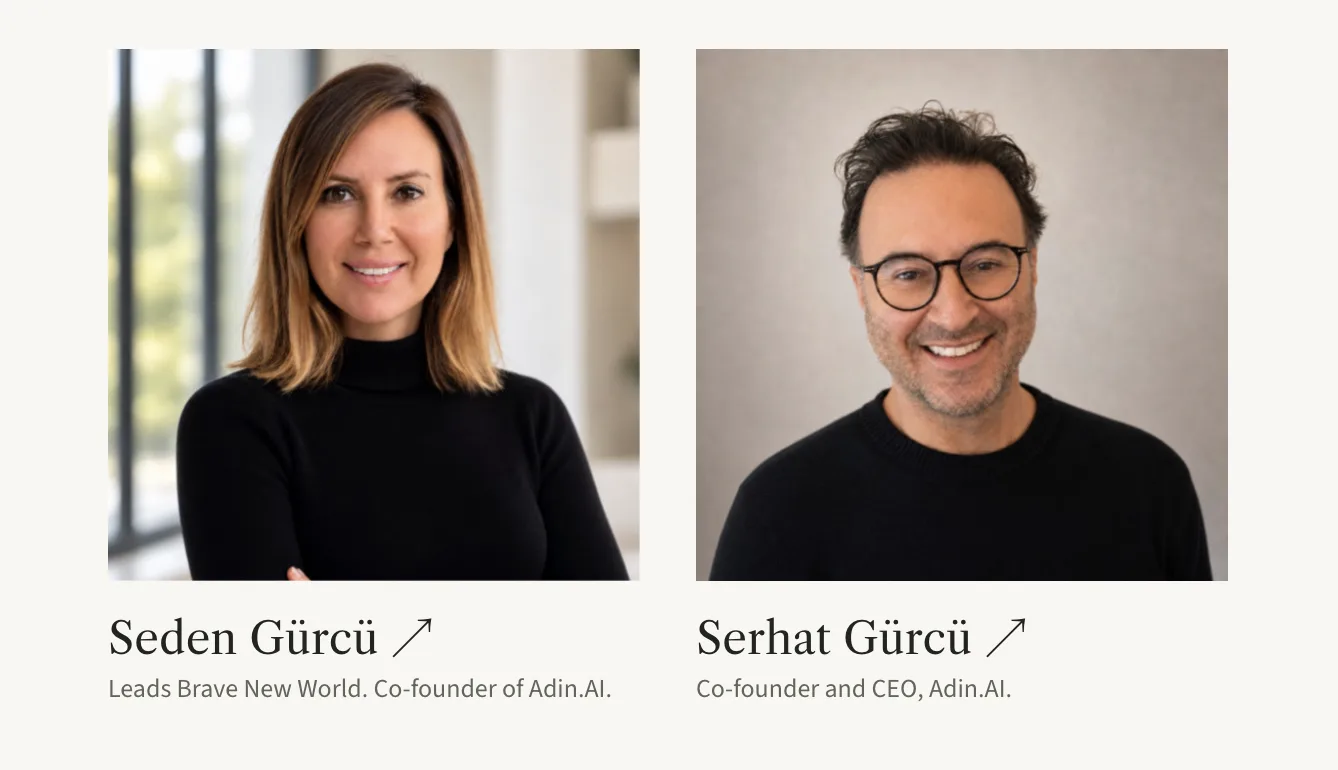
My sister, Seden Gürcü, and I wanted to build a creative agency in the UK that brought technology and creativity together. The name gave us something to build around. But the idea needed time to develop.
It gradually became a creative intelligence system. At its heart was a question that had always interested me in advertising: Why are some ideas stronger than others?
We developed a research approach that studied work recognised at major creative awards around the world. We wanted to understand what made those ideas successful.
When the system received a brief, its AI agents used research and analysis to help develop creative ideas. Experienced people guided the process with their judgement, understanding of brands and creative decisions.
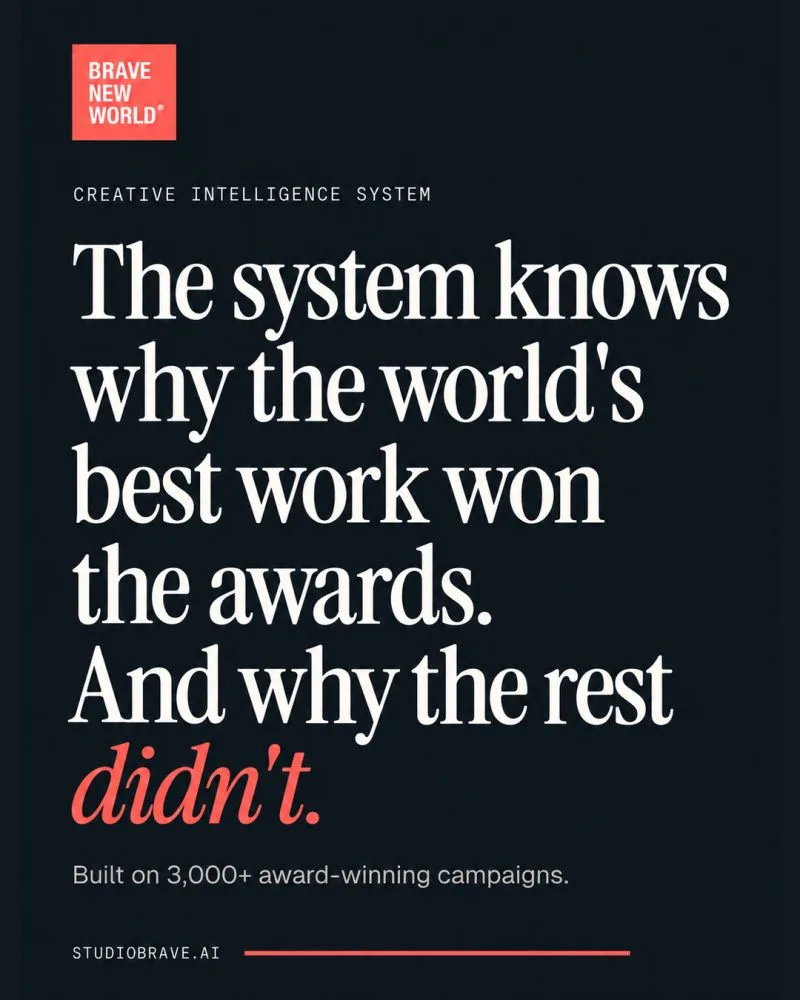
That was the exciting part for me. The relationship between technology and creativity that I had imagined years earlier was becoming something we could actually work with.
We launched Brave New World in 2025. We had registered the name long before that. Understanding what we wanted to build, and then building it, took time.
Brave now operates in the UK with its creative intelligence system. Some major brands are testing it. Others are already using it in their work.
It makes me happy to see that a question inspired by a novel has become part of real projects.
How can brands become part of this future?
Brave is also part of Adin.AI’s AI Services offering. This connection comes from something we’ve learned through years of working with major brands: Building good technology doesn’t automatically mean people will use it.
Large companies have established ways of working. They have teams, approval processes, habits and existing systems. Any new technology has to find its place within all of that.
However useful it may be, people need time to make it part of their daily work.
That’s why I believe in the AI Services approach. We can bring human experience and AI capabilities together through a service model that brands already understand.
Teams have people they can talk to and think with. AI becomes part of that shared work. A familiar working relationship can make a new technology easier to adopt.
We created AI Services at Adin.AI with this in mind and made Brave part of it. We want to reduce the distance between what technology can offer and what companies are ready to use.
Seeing where Brave is now reminds me of that early excitement. I believed technology could create more room for creativity. We’re also building the human side of that idea, because people need to feel comfortable working with it.
There’s an interesting connection between Huxley’s novel and what we’re building. The book asks uncomfortable questions about where progress might lead us. When I see the same name, I also see the possibility of a future with more room for human imagination.
My optimism about technology depends on how we choose to use it.
I sometimes think about that first question. If I hadn’t written to a firm I found on Google, this story might never have started.
That’s something I love about being a founder. You can take a possibility seriously and ask the first question before you have all the answers. Then you work with people to make it real.
Experienced people and AI agents can create great results together. Brave is one example.
If you’re curious about how the Brave Creative Intelligence System works, and how we can develop world-class advertising campaign ideas together in just a few days, contact me. I’d love to share more.
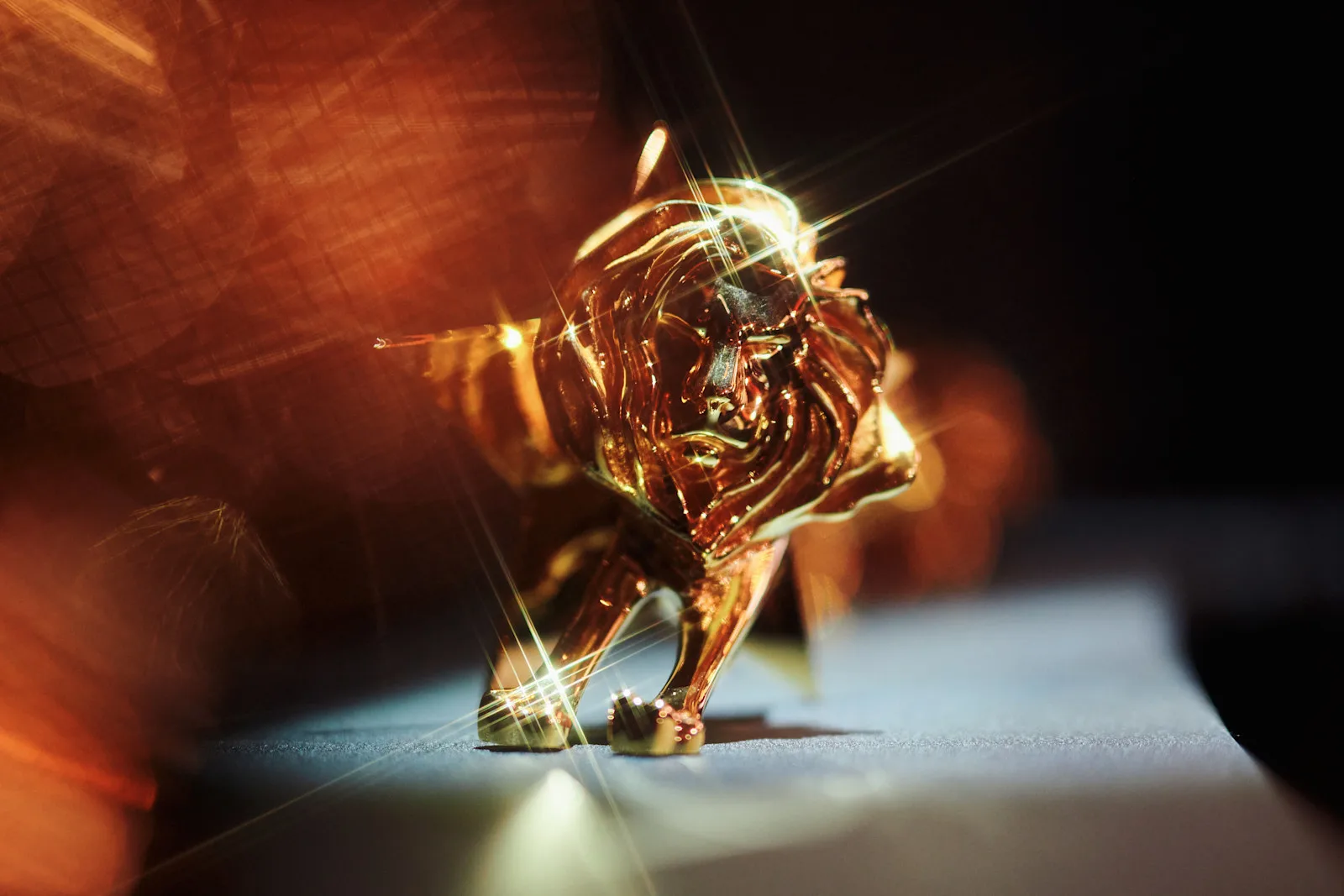
Next year, we’ll enter Cannes Lions with an idea created by people and AI agents together. Let’s see how the jury looks at it.
Sources
- Brave New World trademark registration, UK00003789469, 12 August 2022 — trademarks.ipo.gov.uk
- London photo, Marcin Nowak — unsplash.com
- Cannes Lions award image, official Cannes Lions Awards page — canneslions.com