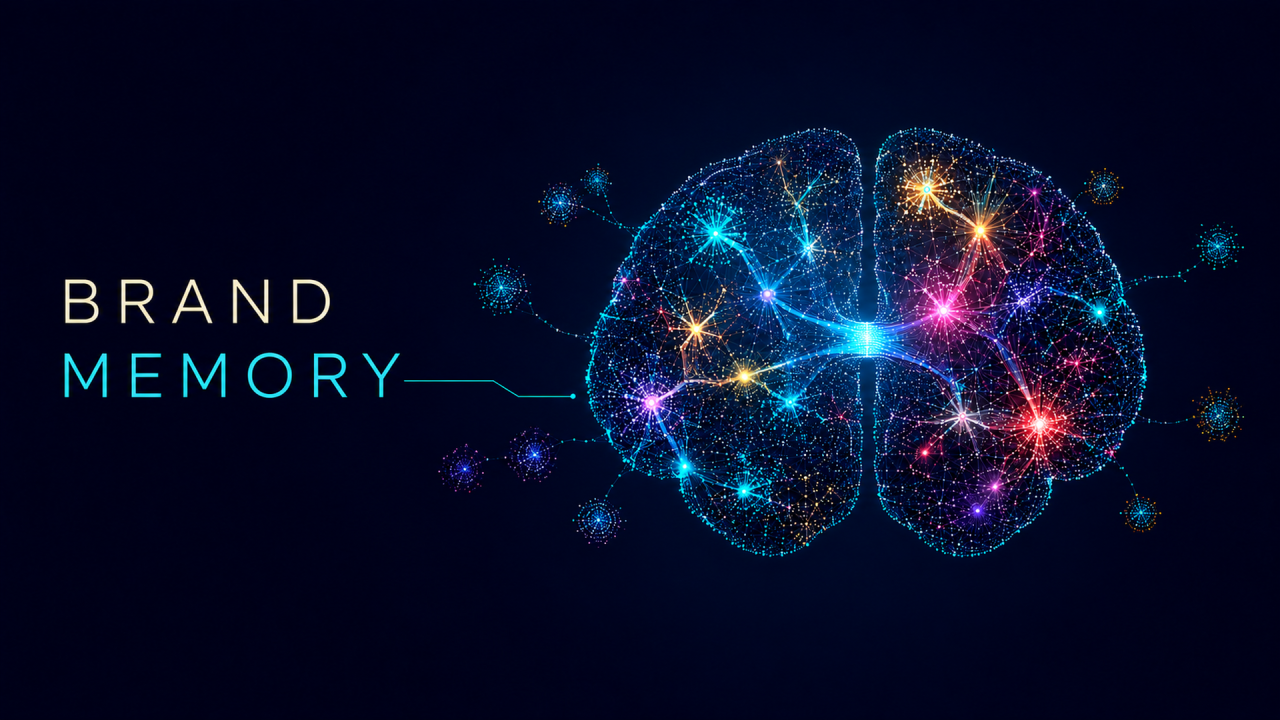
Without memory, your brand starts every day from zero. And it will never be ready for AI.
Most brands are not ready for AI. Not because they lack tools or data. Because their memory is scattered.
Brand memory is the shared record of what your brand has done, learned, and decided. It connects campaign results with brand rules, past decisions, and the human feedback behind them.
It matters because AI needs this context to make decisions that fit your brand. Without it, teams repeat old work, knowledge leaves with employees or agencies, and AI never truly learns what makes the brand different.
Ask one question: "Where is our brand memory?"
If the answer is a person, an agency, or a shared drive, every AI system starts with the same problem.
It can process the world. It cannot remember your brand.
Ask a marketing team to name last year's best campaign, and most people will agree.
Ask why it worked, and the room often goes quiet. The agency may have changed. The media lead may have left. The answer is probably buried in an old presentation.
A nine-figure budget. Thousands of decisions. No shared memory.
That is the real problem. Not the size of the budget, but the silence behind it.
Your Brand Has Hundreds of Reports. Why Does It Still Forget?

▦ Data: What Happened
Campaigns and results from every channel. Necessary, but not enough. Your competitors can use the same platforms and tools.
◆ Context: What the Brand Allows
The brand's rules. What should never be said? Which audiences, channels, or categories need special treatment? These rules often live in people's heads or files no one opens.
✦ Decisions: Why It Happened
Why did the budget change? Why did the team choose that creative? What did they expect, and what happened? This is the most valuable layer, and the one reports usually miss.
Data tells you what happened. Memory tells you why.
What Happens When Your Brand Memory Belongs to Someone Else?

You change agencies, but your data and campaign history belong to the old agency, not to your brand. What does the new agency actually inherit?
Your best employee leaves. Years of context leave with them. Does the next person continue from what the brand learned, or start again from zero?
One market has already solved a problem. Does another market know, or pay for the same lesson again?
Reports remain. But if the reasons behind decisions disappear, what can AI actually learn?
If your brand memory can leave with a person or an agency, it does not belong to the brand.
Would You Trust a Brilliant Employee Who Forgets Every Morning?
Imagine hiring someone brilliant and fast. They can compare thousands of options in seconds and never get tired. But every morning, they forget the day before.
They do not remember your rules, campaigns, or feedback. You have to explain everything again. How much work would you trust them with?
AI without memory works like this. It has general knowledge, but it does not know your brand. It starts every campaign from zero.
What Does AI Need Before It Can Remember Your Brand?
Consolidated data: Channels, campaigns, and results connected through one shared language.
Brand rules: Clear boundaries for what the system can and cannot do.
Decision history: The reason behind each budget change, creative choice, and approval.
Feedback: Human corrections that the system remembers next time.
Without these four parts, AI can give a general answer. It cannot make a decision that truly belongs to your brand.
How Do You Stop Your Brand From Starting at Zero?
↔ Connect the Data
Make it clear where the data lives and who owns each account.
▣ Put Every Brand Rule in One Place
Put brand safety, frequency limits, publisher commitments, and creative standards in one place.
◎ Save the Reason, Not Only the Result
Ask: Why did we change the budget? What did we expect? What happened? A result without a reason is only a number.
↻ Make Every Campaign Teach the Next One
What did we learn for the next campaign? If that lesson does not shape the next starting point, you have an archive, not a memory.
✓ Use Adin.AI
Adin.AI brings data, rules, decisions, and feedback into one shared memory, so every campaign begins with what the brand has already learned.
What Happens When Every Campaign Remembers the Last One?

Adin was not built as another dashboard. The problem was simple: data lived inside platforms, rules inside files, and decisions inside people's heads.
Adin brings those layers together. It connects campaign data, learns the brand's rules, and records decisions, approvals, and feedback. Every campaign becomes part of the next one.
The memory belongs to the brand. Not to Adin, the agency, or the platform.
The first deployment began with one brand in one market for one of the world's leading companies. More than twenty brands across four categories in that country are now managed through Adin.
As the shared memory grew, budget efficiency increased by 73%. More importantly, each new brand could begin with what the group had already learned.
you can book a demo here
The Question Every CMO Should Ask This Week
A brand that cannot remember what it did cannot explain what happened or why. It begins every campaign from zero and cannot give AI the context it needs.
A brand is not only the sum of its campaigns. It is the sum of what it remembers and learns.
Start with one question:
Where is our brand memory?
If the answer is clear, the brand is ready to learn. If the room goes quiet, that is where the work begins.
That brings us to the end of this issue. If you have a question, you can send me a DM anytime.
Until next time, take care.